Within the demanding world of today's pro-level oversteer competition, success is far more than exclusively a result of brute horsepower or behind-the-wheel bravado. Rather, it has become a intricate science that necessitates a painstaking fusion of choosing a inherently capable car, equipping it with the most precise competition components, and, most essentially, comprehending its real-time performance on the track through sophisticated vehicle dynamics analysis tools. This exhaustive guide acts as your roadmap from the very first concept of a drift build all the way to the last engineering-refined tweaks that elevate a strong vehicle into a consistent winner. We will delve deep into the precise engineering of car suspension tuning, showing how a modern vehicle dynamics tool like precise measurement hardware removes guesswork and offers unparalleled insight into your chassis's actual performance.
The foundation of any successful drift car is, indisputably, the chassis itself. A select group of platforms have attained renowned reputation within the global sliding culture due to their natural handling characteristics, strong design, and the immense range of performance components available. Choosing the correct platform is the first and most crucial choice a enthusiast will make. To illustrate, the BMW's E36 3 Series is commonly accepted as one of the best all-around drift cars of all time. Its almost ideal balanced front-to-rear weight, coupled with a driven rear axle setup and extremely reliable six-cylinder engines, creates a chassis that is at once accessible for beginners and highly effective in the hands of a expert competitor. The evolution of this lineage, the E46 model BMW, builds upon these attributes with a even more developed structure, broader track for improved high-speed stability, and even increased turning capability straight from the OEM. Another powerful contender in the pro scene is the C6 generation Corvette.
This American track weapon introduces a unique combination of strengths to the sideways discipline, such as a low-mass aluminum chassis, a backwards-positioned gearbox and differential unit that contributes to an ideal balance, and the colossal low-end power of a powerful LS V8 motor. This combination makes it an absolute monster on track, able of starting and holding long drifts with apparently effortless deployment of acceleration. For those seeking exceptional value, the 350Z model Nissan rises above as a excellent candidate. It comes from the manufacturer with a rigid body structure, a effective factory limited-slip differential, and the smooth VQ series engine that provides ample performance for mastering and advancing in the activity. Its follow-up, the 370Z model, offers further advancements in body strength, steering geometry, and overall engine performance, establishing its position as a common selection among competitive drivers. Further historic platforms that deserve attention encompass the lightweight unique FC generation RX-7, the most popular Nissan S13 240SX, the V8-powered Ford Mustang SN95, the more recent BMW E90, and the small yet surprisingly engaging and instructive Mazda MX-5. Each of these chassis offers a distinct array of traits, complexities, and capabilities, but they all have in common the basic components necessary to serve as a competitive sliding vehicle.
However, choosing the right platform is only the first step. To access the true potential of every of these cars, major modifications to the steering geometry and chassis control systems are completely mandatory. This is where the realm of performance tuning hardware comes into critical view. The single most impactful improvement for a serious drift car is the fitting of a maximum-angle drift angle kit. These advanced kits, for example those manufactured by performance brands like specialist manufacturers, are created to significantly increase the vehicle's possible lock-to-lock rotation. A OEM street car is extremely restricted in how far its front wheels can rotate, a design limitation for public road operation. In oversteer driving, however, maximum opposite lock is frequently required to manage and hold a angle. An angle kit substitutes the stock uprights, tie rods, and potentially control arms with components that enable the wheels to reach angles over 70 or even 80 °, compared to a normal factory setting of around 40 to 50 degrees.
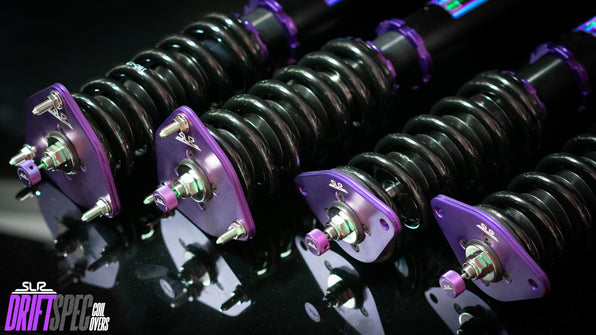
This tremendously increased capability offers the pilot with significantly more command during a slide, allowing it to be much more straightforward to initiate a drift, maintain it through a long turn, and switch seamlessly from one side to the opposite. The difference in handling is truly revolutionary. Combined with a correctly selected angle kit is the equally critical upgrade to the car's damping system. Off-the-shelf or including high-end street dampers are generally not intended for the particular and brutal requirements of sliding. A purpose-built set of adjustable dampers is paramount. These specialized dampers incorporate specific valving and spring strength that are designed for the extreme load shifting that is characteristic of aggressive driving. When a driver begins a angle, the vehicle's mass is transferred violently to the outer of the turn. Proper drift-spec coilovers handle this shift in a consistent fashion, allowing the chassis to find its balance rapidly and providing the pilot precise feedback through the wheel and cockpit. They also allow for precise setting of ride height, damping firmness, and corner weighting, which are all fundamental parts of fine-tuning the vehicle's behavior to a given circuit or piloting technique. In combination, a high-quality angle modification system and a properly chosen pair of performance suspension units constitute the undeniable mechanical foundation upon which all future refinement is constructed.
Once the core parts is in place, the following critical phase in the development is the precise tuning of the car's wheel angles. This is the realm of vehicle alignment optimization, a procedure that can appear overwhelmingly complex to the uninitiated but is, in practice, the defining factor to turning a collection of high-performance pieces into a harmonious and consistent machine. The most debated element of tuning for sliding is undoubtedly camber angle. Camber is the tilt of the rim in relation to the vertical line when looked at from the forward of the vehicle. If the upper part of the wheel is leaning inward, this is referred to as camber-in. In drifting, an inward tilt on the front axle tires is generally employed and is regarded as critical. The purpose is intrinsically tied to car alignment tuning tire contact.
When a car is turning at extreme sideways angles, the chassis rolls to the external of the bend. This chassis roll makes the outside front tire to lose its best contact patch with the asphalt. By applying an inward tilt, the tire is pre-tilted to account for this lean. As the car leans into the turn, the tire becomes more upright with the road surface, increasing its bite at the precise point when it is most required for directional command. Usually, front axle angles for a dedicated drift machine range from approximately -3 degrees to as extreme as -5 degrees or even beyond, depending on the specifics of the chassis setup, rubber selection, and operator style. The rear axle tires also utilize negative camber, but the angles are typically less and subtler than the front axle. Excessive negative camber at the rear can result in the chassis excessively prone to oversteer and hard to control on throttle input, as it diminishes the available grip area of the driven wheels during linear acceleration. Therefore, rear angles are often in the ballpark vehicle dynamics tool of -1 degree to -3 degrees, achieving a careful balance between offering enough lateral bite to aid in starting and holding the slide while also keeping effective grip for exiting the corner. camber angle is merely one component of the more complex tuning equation, which furthermore encompasses toe setting, caster angle, and suspension-induced steering modification.
Toe angle describes the direction of the tires when viewed from above. Inward toe means the front edges of the tires are closer together than the rear edges, while toe-out means the opposite. For sliding, a slight amount of front toe out is often used to drift telemetry software sharpen the initial handling feel, making the chassis feel more agile and eager to start a drift. Rear axle toe angle is typically set to zero or a incredibly small amount of positive toe to foster stability under power. caster angle is the forward or backwards angle of the kingpin axis when looked at from the side-on of the vehicle. More caster angle enhances feedback and high-speed solidity, and it also increases camber increase during steering, which is extremely advantageous. Adjusting these settings is a detailed dance where a adjustment to one parameter can and often will affect the other settings. The traditional approach for setting a car's alignment for drifting has for a long time been a tedious affair of trial and error. A pilot or engineering group would make a adjustment based on a hunch, run the chassis on track, use the operator's subjective sensation and comments, and then make a further tweak. This process would iterate time after time until the chassis felt "good" or the allotted testing period ended. This system is not only incredibly inefficient in terms of man-hours and costs, but it is additionally deeply imprecise.
Driver perception is a famously inconsistent measurement tool, colored by many variables such as fatigue, evolving track conditions, ambient heat, and just the focus of the pilot on that particular run. What feels "loose" on one run might feel "pushing" on the next lap, resulting in contradictory data and ineffective tweaks. This age-old problem in vehicle dynamics optimization is precisely where modern technology has made its mark to completely change the methodology.
The rise and adoption of specialized drift telemetry software has ushered in a completely new paradigm for engineering and refining competitive sliding vehicles. These tools, exemplified by cutting-edge solutions like modern telemetry hardware, function by physically measuring the real-time mechanical behavior of the chassis as it is being driven on the circuit. As opposed to relying on subjective impression, these devices collect quantifiable metrics on essential parameters such as shock absorber movement, individual tire rotation, G-force loading, lock position, and throttle and brake position. This collected telemetry is then interpreted by powerful algorithms that can plot and analyze the data in a comprehensible way. For the first time ever, engineers and builders can observe specifically what the vehicle is doing at every millisecond of a drift. This ability changes the complete alignment optimization workflow. Think about the particular goal of optimizing the front axle camber for a given car. Instead of making a modification from -3 degrees to -3.5 degrees and then testing several runs to try and "perceive" a improvement, a telemetry system can deliver instant and clear feedback. The software can indicate graphically how the tire's loading is performing during the key phases of a drift: the initial flick, holding the angle, and transition. It can show if the existing camber setting is enabling the loaded tire to keep ideal loading or if the tire is overloaded on its outer edge.
The tool can then suggest data-driven suggestions for modification. Perhaps the data shows that the tire is even overworking its outer shoulder at -3.5 degrees of camber, indicating that a move towards angle, say -4 degrees, might be beneficial. On the other hand, the information might reveal that the tire is not reaching optimal operating temp or that the inner edge is degrading unevenly, which could point to that there is too much angle and a modest lessening back to -3.2 degrees would be more optimal. This level of precision and practical insight was literally unattainable in the time of solely mechanical tuning.
The effect of utilizing a dedicated drift telemetry system goes well beyond merely setting alignment. It becomes an invaluable coilover setup tips that is specific to your exact chassis. When setting the shock absorber settings on your suspension, instead of using imprecise guidelines or copying another team's setup, you can use the software to analyze how the chassis is performing in response to your changes. The application can display the suspension travel trace over a run, revealing if the shocks are handling the chassis motion optimally or if they are allowing the car to bounce excessively after a direction change. It can aid in pinpointing issues like bottoming out or topping out, enabling you to introduce educated choices to spring preload, rebound/compression values, or stance. This methodology translates just as well to the complex art of car alignment tuning. In addition to camber angle, the tool can give insight into how adjustments to toe and caster angle are impacting the chassis's balance during different phases of a drift. For example, it can help you to ascertain the optimal amount of front toe-out for your individual angle kit setup and piloting technique by showing the speed of turn-in reaction and the predictability of the vehicle at lock lock. This turns the tool an extremely useful drift suspension tuning guide that is actively informed by the live performance of your personal car on the track. It shifts the entire process from a dark art into a scientific optimization procedure.
Furthermore, the application of a tool like modern telemetry is not limited to professional teams with extensive budgets. For the club-level driver, it acts as an amazing force multiplier. It practically provides the driver with the analysis of a professional dynamics engineer without the associated expense. It speeds up the learning curve by giving clear answers to problems that would otherwise take countless track days of experience to understand. A builder can learn how their particular car reacts to various inputs, gaining a more profound understanding of suspension theory in the endeavor. It also democratizes professional suspension engineering techniques, allowing all drivers with the desire to refine their vehicle to accomplish it in a structured and effective way. This is especially important in a activity like drifting, where engineering know-how has historically been a tightly held advantage among top drivers. Today, that knowledge can be in the garage of any motivated driver.
In conclusion, the process to building and optimizing the ideal high-performance sliding vehicle is a multi-stage mission that smoothly combines classic engineering principles with 21st-century data technology. It starts with the informed choice of a legendary chassis, then enhanced by the application of critical performance hardware like high-performance drift angle kits and expertly selected performance coilovers. The process then advances into the detailed phase of chassis dynamics adjustment, where settings like camber angle, toe setting, and caster are meticulously adjusted to match the vehicle's new capabilities and the pilot's individual needs. The final step, and what really differentiates the contemporary approach from the past, is the use of a advanced vehicle dynamics tool. This system eliminates the approximation and waste of purely feel-based tuning by delivering objective, actual data on how the car is actually behaving. It serves as an incredible engineering partner, a definitive coilover setup manual, and a all-in-one performance analyzer. Together, this complete philosophy ensures that each and every component of the drift car—from the selection of the platform to the most minute click on the coilover—is refined for ultimate performance on the track. It signifies the complete progression of the art of drifting, bridging raw car control with surgical vehicle setup to forge the perfect competitive cars possible.